Fire doors are a critical component of fire safety in both residential and commercial buildings across the UK. They help to prevent the spread of fire and smoke, providing essential time for evacuation and emergency response. However, the regulations governing fire doors differ significantly between residential and commercial properties.
This article provides an in-depth comparison of the UK regulations governing fire doors in both sectors, outlining key requirements, compliance standards, and practical implications.
Fire Door Regulations Overview
The regulations for fire doors in the UK are primarily governed by the following legislative and regulatory frameworks:
- The Regulatory Reform (Fire Safety) Order 2005 (FSO).
- Building Regulations 2010 (Approved Document B).
- British Standards (BS 476 and BS EN 1634).
- Local Authority Building Control (LABC) requirements.
These regulations set the standards for fire resistance, installation, maintenance, and testing of fire doors, ensuring they function effectively in the event of a fire.
Residential Fire Door Regulations
Building Regulations (Approved Document B)
For residential buildings, fire doors are required in specific locations to slow the spread of fire. The key regulations include:
- New and Converted Residential Properties: Fire doors must be installed in multi-occupancy buildings, such as blocks of flats and Houses in Multiple Occupation (HMOs).
- Two-Storey Homes with an Internal Garage: A fire door with at least 30 minutes of fire resistance (FD30) is required between the garage and the main house.
- Three-Storey Homes or Higher: Any doors leading to stairwells must be fire-resistant to protect escape routes.
- Flat Entrances: Front doors in flats must be fire-rated to prevent the spread of fire between units.
Fire Door Specifications
- Fire Resistance Ratings: Typically, FD30 (30-minute protection) is required in most cases, but FD60 (60-minute protection) may be necessary in some high-risk buildings.
- Self-Closing Mechanisms: Doors in communal areas must have self-closing devices to ensure they are always shut when not in use.
- Intumescent Seals: Must be fitted to prevent smoke and fire from spreading.
- Maintenance: Landlords and property managers are responsible for maintaining fire doors in rental properties and HMOs.
Commercial Fire Door Regulations
The Regulatory Reform (Fire Safety) Order 2005
For commercial buildings, fire door regulations are stricter due to higher occupancy levels and greater fire risks. The key requirements include:
- Fire Risk Assessments: Employers and building owners must conduct regular fire risk assessments, which include checking fire doors.
- Escape Routes Protection: Fire doors must be installed to protect corridors, stairwells, and other escape routes.
- Minimum Fire Resistance Rating: Commercial fire doors typically require an FD30 or FD60 rating, but in high-risk environments, FD90 or FD120 may be needed.
- Accessibility: Fire doors must comply with the Equality Act 2010, ensuring accessibility for disabled individuals.
Installation and Maintenance
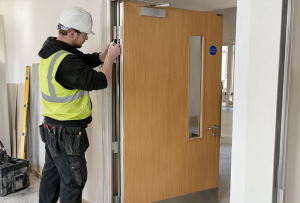
- Installation: Fire doors must be installed by a certified professional following manufacturer instructions and relevant British Standards.
- Signage Requirements: Fire doors must be clearly marked with “Fire Door Keep Shut” or “Fire Door Keep Locked” where appropriate.
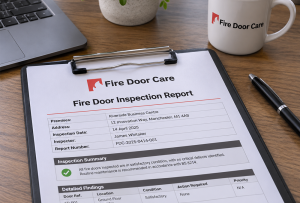
- Routine Inspections: Fire doors inspections must regularly (at least every six months) by a competent person.
- Hardware and Components: Must include fire-rated hinges, latches, and automatic closers.
Key Differences Between Residential and Commercial Fire Doors
| Aspect | Residential Fire Doors | Commercial Fire Doors |
| Regulatory Body | Building Regulations (Approved Document B) | Fire Safety Order 2005 |
| Minimum Fire Resistance | FD30 | FD30 to FD120 (varies by risk) |
| Self-Closing Requirement | Only in communal areas | Required in most cases |
| Risk Assessment | Not always required | Mandatory for compliance |
| Inspection Frequency | Typically annual | At least every six months |
| Accessibility Considerations | Basic requirements | Must comply with the Equality Act 2010 |
Conclusion
While both residential and commercial fire doors serve the same fundamental purpose of preventing the spread of fire, the regulations governing them differ significantly. Residential fire doors are primarily concerned with protecting occupants in flats, HMOs, and multi-storey homes, whereas commercial fire doors are subject to stricter rules, including mandatory risk assessments and more frequent inspections.
Compliance with these regulations is essential for safety and legal adherence, making it crucial for property owners and managers to understand their responsibilities and ensure that fire doors are properly installed and maintained.
Why Choose Fire Door Care?
Protect your property and ensure safety with our expert fire door services! We specialize in professional fire door installation, inspection, and repair, ensuring full compliance with fire safety regulations. Our certified team delivers high-quality solutions to enhance fire resistance, prevent smoke spread, and safeguard lives. Whether you need a new fire door, routine inspections, or urgent repairs, we provide reliable and cost-effective services tailored to your needs.
- Safety First: We prioritise protecting lives and properties by ensuring every fire door meets the highest safety standards.
- Uncompromising Quality: Our expert team delivers precision craftsmanship and reliable solutions for long-lasting fire protection.
- Integrity You Can Trust: We are committed to honest, transparent, and dependable service at every step of the process.
- Customer Focused: Your safety is our mission. We tailor every inspection, repair, and installation to your unique needs.
If you would like to find out more about our fire door services, or would like help, advice or a quote please feel free to call us on 0203 488 5923 or send us a message here.