Fire safety is paramount in any commercial property. Beyond alarms and sprinkler systems, one of the most critical passive fire protection measures is the fire door. Far from being just a regular door, a properly chosen and installed fire door can be the difference between minor damage and a catastrophic loss of life and property. But with various ratings, materials, and regulations, how do you choose the right one for your commercial premises in the UK? Let’s break it down.
Understanding Fire Door Ratings: The FD System
In the UK, fire doors are rated using an ‘FD’ (Fire Door) system, followed by a number that indicates the minimum duration in minutes that the door can withstand fire and smoke.
- FD30: Offers 30 minutes of fire resistance. These are common in many internal applications.
- FD60: Provides 60 minutes of fire resistance, often found in higher-risk areas or escape routes.
- FD90: A less common but available option, offering 90 minutes of protection.
- FD120: Designed for 120 minutes of resistance, typically used in very high-risk environments.
Crucially, it’s not just the door leaf itself. The fire door rating applies to the entire assembly, including the frame, hinges, seals, and any glazing. All components must be fire-rated to the same standard.
You can learn more about fire door ratings in our blog post The Ultimate Guide to UK Fire Door Ratings.
Key Components of a Fire Door
To truly understand what makes a fire door effective, it’s worth knowing its essential components:
- Door Leaf: This is the main body of the door, constructed with fire-resistant materials such as chipboard, timber, or composite cores.
- Door Frame: Must be made from a suitable material (usually timber or steel) that can withstand the heat and stress of a fire for the specified duration.
- Intumescent Strips: These are fitted into grooves in the door frame or the door leaf. When exposed to heat, they expand rapidly to seal the gap between the door and the frame, preventing the passage of smoke and flames.
- Cold Smoke Seals: Often combined with intumescent strips (known as intumescent and smoke seals), these prevent the passage of cold smoke, which can be just as deadly as fire.
- Hinges: Must be CE marked and fire-rated, ensuring they won’t buckle or fail under heat, keeping the door securely in its frame.
- Door Closers: Essential for fire doors, these ensure the door automatically closes and latches shut every time it’s opened. This is vital for maintaining the compartmentation of a building.
- Ironmongery: Handles, locks, and vision panels must also be fire-rated to prevent them from failing and compromising the door’s integrity.
UK Regulations and Your Responsibilities
In the UK, the primary legislation governing fire safety in non-domestic premises is the Regulatory Reform (Fire Safety) Order 2005. This places the responsibility for fire safety squarely on the “responsible person” (e.g. employer, owner, occupier).
Under the RRO, you must:
- Conduct a Fire Risk Assessment: This fire risk assessment will identify fire hazards and determine the necessary fire safety measures, including where fire doors are required and what rating they need.
- Ensure Appropriate Fire Doors are Installed: Based on your risk assessment, you must install fire doors that meet the required performance standards.
- Maintain Fire Doors: Fire doors are not a fit-and-forget solution. They must be regularly inspected, maintained and repaired to ensure they remain effective. This includes checking closers, seals, hinges, and ensuring no damage has occurred. Common issues include wedged-open doors, damaged seals, or faulty closers.
- Keep Records: Maintain records of your fire risk assessment and all fire safety equipment maintenance.
Where Do You Need Fire Doors?
The specific locations for fire doors will be identified in your fire risk assessment, but common areas include:
- Escape Routes: Corridors leading to final exits.
- Stairwells: To protect vertical escape routes.
- Compartmentation: To divide a building into fire-resistant compartments, preventing the spread of fire.
- High-Risk Areas: Such as boiler rooms, electrical cupboards, or areas storing flammable materials.
- Between Different Occupancy Types: For example, between an office and a retail space.
- Multi-Occupancy Building: Entrances to flats or apartments within a multi-occupancy building such as high-rise flats.
Choosing the Right Fire Door Material and Finish
While fire resistance is key, aesthetics and practicalities also play a role:
- Timber Fire Doors: The most common type, offering a wide range of finishes (veneers, laminates, paint-grade) to match your interior design. They are robust and effective.
- Steel Fire Doors: Extremely durable and often used where security or severe usage is also a concern, such as in industrial settings or external fire exits.
- Glazed Fire Doors: If natural light or visibility is required, fire-rated glass can be incorporated into the door. The glass must be specialist fire-resistant glazing, not ordinary glass.
- Laminated/PVC Encapsulated Fire Doors: Offer durability and ease of cleaning, ideal for high-traffic areas or environments requiring good hygiene.
Common Mistakes to Avoid
- Wedging Fire Doors Open: This is one of the most dangerous and common breaches of fire safety. A fire door is useless if it’s not closed.
- Removing or Damaging Intumescent/Smoke Seals: These are vital for containing fire and smoke.
- Painting Over Hinges or Closers: This can impair their function.
- Installing Non-Fire-Rated Ironmongery: Using standard handles or locks will compromise the door’s integrity.
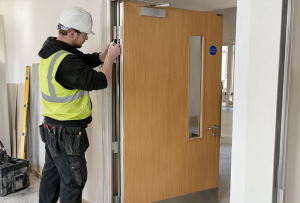
- Poor Installation: A fire door must be installed by a competent person to the manufacturer’s instructions to ensure its effectiveness.
The Importance of Professional Fire Door Advice
Navigating fire safety regulations and choosing the correct fire doors can be complex. It is highly recommended to:
- Engage a Qualified Fire Risk Assessor: They can provide a comprehensive assessment tailored to your property.
- Consult with Fire Door Specialists: Reputable suppliers and installers can advise on the best doors for your specific needs and ensure compliance.
Investing in the right fire doors isn’t just about meeting regulations; it’s about safeguarding lives, protecting your assets, and ensuring the continuity of your business. Make sure your commercial property is equipped with the best possible protection.
Example of a Well-Maintained Fire Door
Think of a fire door not as a simple barrier, but as a system. A well-maintained fire door will show the following signs:
- Clear Certification: It will have a label or a plug on the top or side edge from a recognised certification body (e.g. BWF-CERTIFIRE or a similar scheme), confirming its fire rating (e.g. FD30, FD60).
- Fully Functioning Closer: The door will close smoothly and fully latch shut on its own, without any need for a push or pull.
- Intact Seals: The intumescent and smoke seals will be in perfect condition, with no signs of peeling, damage, or being painted over.
- Solid Construction: There will be no gaps between the frame and the wall, and the hinges will be securely fastened with no missing screws.
- No Obstructions: The area around the door will be kept clear, and no wedges, hooks, or other items will be used to hold it open.
By paying attention to these details, you can ensure that the fire doors in your commercial property are ready to perform their critical function when it matters most. Your proactive approach to fire safety is the most valuable investment you can make.
Why Choose Fire Door Care?
Protect your property and ensure safety with our expert fire door services! We specialize in professional fire door installation, inspection, and repair, ensuring full compliance with fire door regulations. Our certified team delivers high-quality solutions to enhance fire resistance, prevent smoke spread, and safeguard lives. Whether you need a new fire door, routine inspections, or urgent repairs, we provide reliable and cost-effective services tailored to your needs.
- Safety First: We prioritise protecting lives and properties by ensuring every fire door meets the highest safety standards.
- Uncompromising Quality: Our expert team delivers precision craftsmanship and reliable solutions for long-lasting fire protection.
- Integrity You Can Trust: We are committed to honest, transparent, and dependable service at every step of the process.
- Customer Focused: Your safety is our mission. We tailor every inspection, repair, and installation to your unique needs.
If you would like to find out more about our fire door services, or would like help, advice or a quote please feel free to call us on 0203 488 5923 or send us a message here.