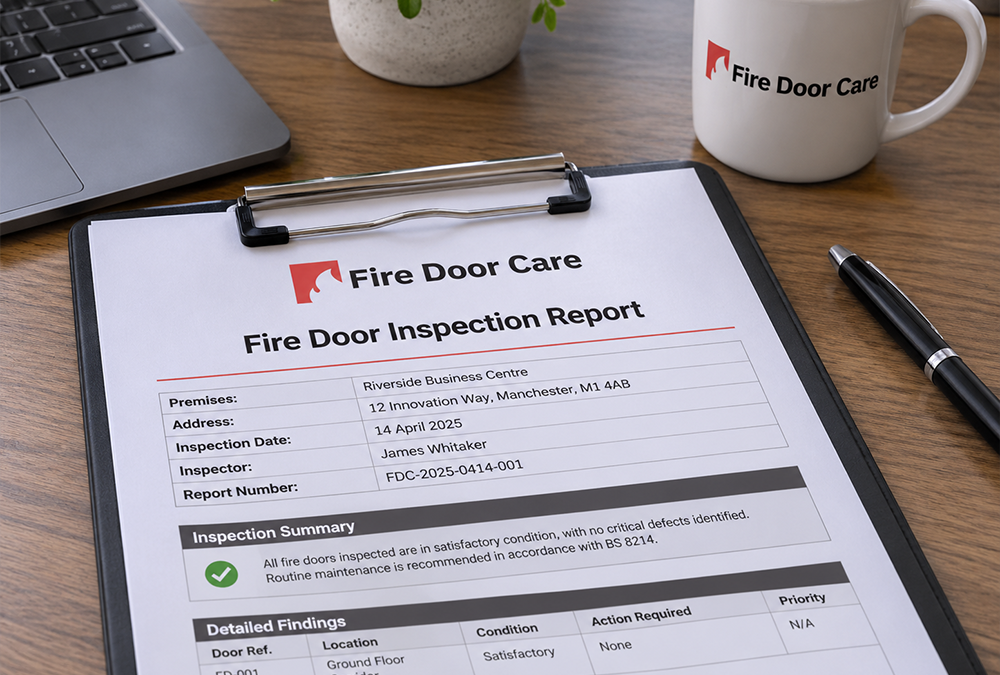
Fire Door Inspection Reports: What Should They Include?
Fire doors are a vital part of any building’s passive fire protection system. Designed to slow the spread of fire

Fire doors must comply with The Regulatory Reform (Fire Safety) Order 2005 and Building Regulations (Approved Document B). They must be correctly installed, maintained, and inspected regularly to ensure they provide the required level of fire resistance.
Fire doors should be inspected at least every six months as per BS 9999. In high-traffic areas, they may require more frequent checks to ensure they function correctly.
Under the Fire Safety Order 2005, the ‘responsible person’ (such as the building owner, employer, or facilities manager) must ensure fire doors are properly maintained and comply with regulations.
A fully certified fire door should have:
Fire doors should never be propped open unless fitted with an approved automatic closing device, such as a fire door retainer linked to the building’s fire alarm system.
Non-compliant fire doors can lead to prosecution, fines, or imprisonment under UK fire safety laws. More importantly, they can fail in a fire, putting lives at risk.
Fire doors are legally required in:
Some common reasons include:

Fire doors are a vital part of any building’s passive fire protection system. Designed to slow the spread of fire

Fire doors are an essential part of a commercial building’s passive fire protection system, helping to prevent the spread of
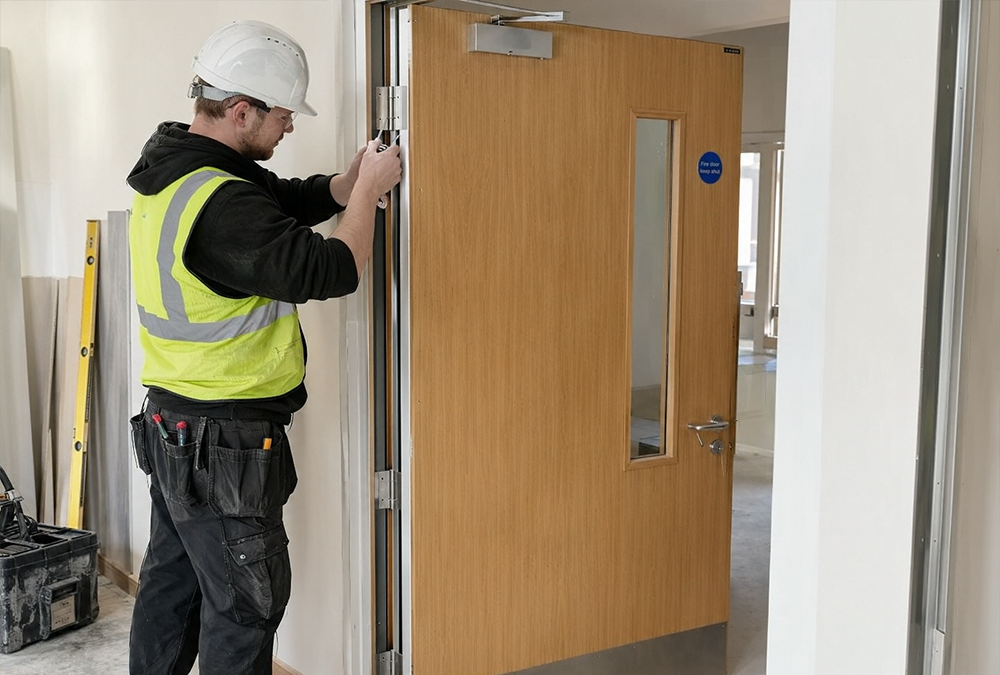
Fire doors play an essential role in protecting buildings and their occupants from the spread of fire and smoke. Whether