Fire doors are a crucial component of passive fire protection in commercial buildings. When installed and maintained correctly, they save lives by containing fire and smoke, protecting escape routes, and buying vital time for evacuation and emergency response.
However, the effectiveness of a fire door is only as strong as its compliance. In recent years, UK fire safety enforcement has intensified, making fire door compliance audits more important than ever.
If you’re a facilities manager, property owner, or responsible person under fire safety legislation, this blog post explains what a commercial fire door audit involves, why it’s legally and practically essential, and how a professional service can help ensure your doors are up to standard.
Why Are Fire Door Compliance Audits Important?
A fire door compliance audit is a detailed inspection and review of all fire doors within a commercial premises to assess their conformity with legal, regulatory, and manufacturer standards. These audits help:
- Identify non-compliant or poorly maintained fire doors.
- Reduce liability and protect lives in case of fire.
- Ensure you’re meeting your legal obligations under UK fire safety law.
- Avoid fines, legal action, and reputational damage.
According to the Fire Door Inspection Scheme (FDIS), more than 75% of fire doors inspected in the UK are non-compliant, with common faults including excessive gaps, missing seals, faulty closers, and uncertified components.
UK Fire Safety Regulations: Your Legal Duties
Commercial fire door compliance is governed by a range of UK regulations and standards:
1. The Regulatory Reform (Fire Safety) Order 2005
Under the Fire Safety Order, the Responsible Person must ensure that fire doors are correctly installed, maintained, and inspected. Failure to comply can lead to prosecution.
2. The Fire Safety (England) Regulations 2022
These regulations, which came into effect following the Grenfell Tower Inquiry, place additional responsibilities on those managing multi-occupancy and high-rise commercial or residential buildings, including requirements around fire door inspections.
3. British Standards
Relevant British Standards include:
- BS 8214:2016 (Code of practice for fire door assemblies).
- BS EN 1634-1 (Fire resistance test standards).
- BS 476 Part 22 (Older UK test standard).
- BS 9999 (Fire safety management in buildings).
Compliance audits help ensure your doors meet all these technical and legal benchmarks.
What’s Involved in a Fire Door Compliance Audit?
A professional fire door compliance audit is a structured, multi-step process conducted by certified fire door inspectors. Here’s what to expect:
1. Site Visit and Survey
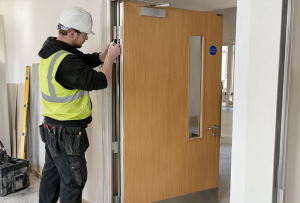
An experienced fire door assessor will visit your premises to:
- Identify all fire door locations.
- Examine escape routes, compartmentation, and fire strategies.
- Determine the type, usage, and rating of each fire door.
2. Visual and Physical Inspection
Each fire door is carefully inspected against a compliance checklist that typically covers:
- Certification Labels: Is the door clearly marked as FD30, FD60, etc?
- Door Gaps and Clearances: Are gaps around the door within the required tolerances (usually 3-4mm)?
- Seals: Are intumescent and smoke seals intact and correctly positioned?
- Ironmongery: Are hinges, closers, locks and latches and handles compliant and in good condition?
- Closers: Does the door self-close securely and consistently?
- Condition: Is the door damaged, warped, or tampered with?
- Signage: Are appropriate “Fire Door – Keep Shut” signs in place?
- Glazing: If it’s glazed fire door, is fire-rated glass used with appropriate beading and seals?
3. Documentation and Reporting
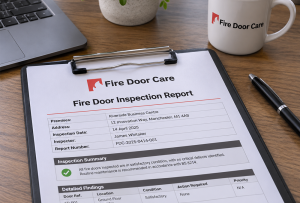
Following the audit, you’ll receive a detailed compliance report, which includes:
- Photographic evidence.
- Pass/fail status for each door.
- Remedial actions required.
- Ratings on the condition and functionality of each door.
- Certification details (or lack thereof).
This report can be used as evidence of compliance during fire safety inspections or enforcement visits.
Common Fire Door Compliance Failures in Commercial Buildings
During audits, professionals frequently identify the following recurring issues:
- Incorrect or missing fire door certification.
- Damaged doors or frames.
- Gaps greater than 4mm around door edges.
- Non-functioning or missing closers.
- Intumescent strips painted over or missing.
- Incorrect or incompatible door hardware.
- Fire-rated glass has been replaced with standard glazing.
- Lack of appropriate signage.
These faults may seem minor but can significantly compromise the fire resistance of the door set.
How Often Should Fire Door Audits Be Carried Out?
There is no one-size-fits-all frequency, but best practice in commercial settings recommends:
- Every 6 months for high-traffic or high-risk areas.
- Annually as a minimum for all other areas.
- After any significant building changes or renovations.
Under the Fire Safety (England) Regulations 2022, quarterly checks are now mandatory for common areas in high-rise residential buildings – and this standard is increasingly being applied in commercial contexts as well.
Who Should Carry Out Fire Door Audits?
A fire door compliance audit must be conducted by a competent and certified professional, ideally one who holds credentials from:
- FDIS (Fire Door Inspection Scheme).
- BM TRADA Q-Mark.
- FIRAS (Third-party certification for installers and inspectors).
- National Association of Fire Door Inspectors (NAFDI).
These certifications demonstrate that the inspector understands the full lifecycle of a fire door; from specification and installation to maintenance and compliance.
What Happens After the Audit?
After the audit, a reputable company will:
- Provide a Clear Action Plan: Detailing which doors need repair, replacement, or further assessment.
- Offer Remedial Work: Including repairs like adjustments, hardware replacement, or full fire door upgrades.
- Support Compliance Management: With ongoing inspections and maintenance schedules.
This ongoing service ensures that your fire doors continue to protect your building and occupants, and keep you legally compliant.
Conclusion: Fire Door Audits Protect More Than Just Compliance
Regular fire door compliance audits are not just about avoiding fines or satisfying insurers; they’re about saving lives and preserving the integrity of your building in the event of a fire.
By partnering with a professional fire door service, you gain peace of mind knowing that your passive fire protection strategy is built on a foundation of compliance, documentation, and expert care.
Why Choose Fire Door Care?
Protect your property and ensure safety with our expert fire door services! We specialize in professional fire door installation, inspection, and repair, ensuring full compliance with fire door regulations. Our certified team delivers high-quality solutions to enhance fire resistance, prevent smoke spread, and safeguard lives. Whether you need a new fire door, routine inspections, or urgent repairs, we provide reliable and cost-effective services tailored to your needs.
- Safety First: We prioritise protecting lives and properties by ensuring every fire door meets the highest safety standards.
- Uncompromising Quality: Our expert team delivers precision craftsmanship and reliable solutions for long-lasting fire protection.
- Integrity You Can Trust: We are committed to honest, transparent, and dependable service at every step of the process.
- Customer Focused: Your safety is our mission. We tailor every inspection, repair, and installation to your unique needs.
If you would like to find out more about our fire door services, or would like help, advice or a quote please feel free to call us on 0203 488 5923 or send us a message here.