Fire safety is a paramount concern in any commercial building, but offices present a unique set of challenges when it comes to ensuring full compliance with fire door regulations. With high foot traffic, multiple occupancy arrangements, and complex internal layouts, understanding fire door regulations in UK office environments is not just good practice, it’s a legal obligation.
This blog explores the key regulatory requirements, compliance responsibilities, and practical considerations when installing and maintaining fire doors in office settings.
Why Fire Doors Matter in Offices
Fire doors are not just passive features of a building—they are active components in fire safety strategy. Properly installed and maintained fire doors help:
- Contain fire and smoke, buying time for evacuation.
- Protect escape routes, such as stairwells and corridors.
- Reduce damage, preserving key structural elements and assets.
- Ensure legal compliance, avoiding fines and criminal liability.
In an office setting, fire doors help protect staff, visitors, and assets while enabling organisations to meet the stringent requirements of UK fire safety legislation, including fire door regulations.
Why Fire Safety is Unique in Office Buildings
Office buildings present specific fire safety challenges that set them apart from other commercial or residential properties. Understanding these unique factors is crucial for developing an effective fire door and overall fire safety strategy.
Key reasons why fire safety is unique in office environments include:
High Occupancy Density
Offices often accommodate large numbers of people during peak hours, increasing the urgency for effective evacuation routes and containment systems.
Multiple Tenants and Shared Spaces
In multi-tenant buildings, different organisations may have varying safety standards or levels of compliance. Coordinated fire safety measures are essential.
Frequent Layout Changes
Offices are frequently reconfigured with new partitions, furniture, or meeting rooms, potentially compromising the original fire compartmentation if not properly assessed.
Heavy Daily Foot Traffic
High usage of doors and corridors leads to accelerated wear and tear on fire doors, closers, and hardware, necessitating more frequent maintenance.
Electronic Equipment and Cabling
Offices contain dense clusters of electrical equipment and wiring, which can become ignition sources or accelerate fire spread if not properly managed.
Storage of Flammable Materials
Paper, toner, office supplies and cleaning products can all contribute to fire load and risk, especially in poorly ventilated or cluttered areas.
Security and Access Control Conflicts
Fire door functionality can be compromised by retrofitted access control systems, magnetic locks, or unauthorised door modifications.
Disabled Access Requirements
Balancing accessibility and fire safety (e.g. wide-opening doors, automatic openers) requires careful integration of compliant products and systems.
Legal Framework Governing Fire Doors in Offices
In the UK, several regulations collectively govern the use of fire doors in offices:
1. The Regulatory Reform (Fire Safety) Order 2005 (RRO)
The RRO is the cornerstone of fire safety law for non-domestic premises, including offices. It places legal responsibility on the ‘responsible person’, typically the employer, building owner, or facilities manager, to ensure fire doors are:
- Correctly installed.
- Regularly inspected.
- Maintained in effective working order.
Failure to comply can result in fines, prosecution, or even imprisonment.
2. Building Regulations – Approved Document B
This sets out detailed fire safety requirements for new builds and significant refurbishments, including:
- Minimum fire resistance ratings (typically FD30 or FD60 for office doors).
- Requirements for door closers, seals and signage.
- Correct placement of fire doors to protect key areas like staircases and escape routes.
3. British Standards (BS 476 and BS EN 1634)
These standards specify the testing and certification criteria for fire door assemblies in the UK. Compliance ensures that doors will perform as expected during a fire event.
Key Considerations for Fire Doors in Office Buildings
1. Risk Assessment & Design Planning
Every office building is different. Conducting a fire risk assessment is the first step in determining the number, location, and specification of fire doors. Consider:
- The number of floors and occupancy levels.
- Office layout, including open-plan areas.
- Escape route strategy and compartmentalisation.
- Existing fire detection and suppression systems.
A competent fire risk assessor should carry out this review to ensure the fire door strategy aligns with the overall fire safety plan.
2. Specification & Certification
All fire doors must be certified by an accredited body (e.g. BWF-CERTIFIRE). Key features to look for include:
- FD rating (FD30 for 30 minutes, FD60 for 60 minutes).
- Intumescent strips and cold smoke seals.
- Third-party certification labels clearly displayed on the door or frame.
- Tested hardware, including hinges, closers, locks and latches.
Avoid cheap or uncertified doors, as they may not provide adequate protection, or even meet legal requirements.
3. Professional Installation
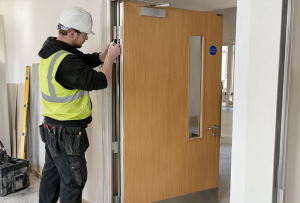
Fire doors must be installed by competent professionals following manufacturer instructions and BS 8214:2016 guidelines. Even a certified door can be rendered ineffective if installed incorrectly. Key aspects include:
- Proper alignment and gap tolerances (typically 2–4mm).
- Correct use of fire-rated seals and foam.
- Secure fitting of certified ironmongery.
- Fire door signage indicating “Fire Door – Keep Shut”.
Ongoing Maintenance and Inspection
Fire doors are not ‘fit and forget’ systems. Regular fire door inspections are critical to ensure continued compliance and performance.
Monthly Visual Inspections
- Check the door closes fully and latches without sticking.
- Ensure intumescent seals are intact and undamaged.
- Verify that hinges, closers, and hardware are functioning properly.
- Look for signs of wear, warping or tampering.
Annual Fire Door Survey
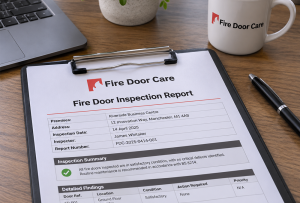
A comprehensive inspection by a qualified fire door inspector should be conducted at least annually. This includes checking:
- Certification labels and compliance with original specifications.
- Frame and structural integrity.
- Compatibility of door hardware.
- Maintenance records and repair history.
Fire door repairs must be carried out with approved materials by competent persons, and unauthorised modifications can void certification.
Common Compliance Challenges in Office Buildings
1. High Traffic Wear and Tear
Office fire doors are used frequently, especially in corridors, stairwells and meeting rooms. This increases the risk of damage to hinges, closers and seals which can lead to non-compliance.
Tip: Install heavy-duty components in high-use areas and schedule more frequent inspections.
2. Retrofitting in Older Buildings
Listed or older office buildings may require bespoke fire door solutions. Retrofitting can be more complex and may require consultation with conservation officers or specialist contractors.
3. Poor User Habits
Wedging open fire doors is a common and dangerous practice in offices. Staff education is vital to reinforce the life-saving role of fire doors.
Tip: Install free-swing closers or magnetic hold-open devices connected to the fire alarm system to maintain accessibility without compromising safety.
Responsibilities of Employers and Building Managers
In office environments, the legal ‘responsible person’ is accountable for fire door compliance. Their duties include:
- Ensuring fire risk assessments are current and acted upon.
- Keeping up-to-date records of inspections and maintenance.
- Training staff on fire safety procedures and the function of fire doors.
- Commissioning certified professionals for installation and repairs.
Conclusion
Fire doors in office buildings are an essential part of a comprehensive fire safety strategy, and compliance is not optional. From initial specification and installation to ongoing maintenance and staff awareness, every step plays a critical role in protecting lives and meeting legal obligations.
By understanding the regulations, investing in quality products, and prioritising ongoing inspections, office managers can ensure their fire door systems are not just compliant, but truly effective.
Why Choose Fire Door Care?
Protect your property and ensure safety with our expert fire door services! We specialize in professional fire door installation, inspection, and repair, ensuring full compliance with fire safety regulations. Our certified team delivers high-quality solutions to enhance fire resistance, prevent smoke spread, and safeguard lives. Whether you need a new fire door, routine inspections, or urgent repairs, we provide reliable and cost-effective services tailored to your needs.
- Safety First: We prioritise protecting lives and properties by ensuring every fire door meets the highest safety standards.
- Uncompromising Quality: Our expert team delivers precision craftsmanship and reliable solutions for long-lasting fire protection.
- Integrity You Can Trust: We are committed to honest, transparent, and dependable service at every step of the process.
- Customer Focused: Your safety is our mission. We tailor every inspection, repair, and installation to your unique needs.
If you would like to find out more about our fire door services, or would like help, advice or a quote please feel free to call us on 0203 488 5923 or send us a message here.