In the wake of the Grenfell Tower tragedy, the UK’s approach to building safety has undergone its most radical transformation in decades. A cornerstone of this overhaul is the Fire Safety (England) Regulations 2022, which explicitly targets structural and systemic vulnerabilities in multi-occupied blocks.
Among these rules, Regulation 10 stands out as a critical operational directive. Focusing heavily on the maintenance and inspection of fire doors, it places clear, non-negotiable legal responsibilities on property managers and building owners.
If you manage, own, or live in a high-rise residential building, understanding these duties is not just about avoiding legal penalties – it is fundamentally about saving lives.
What is Regulation 10 and Which Buildings Does It Apply To?
High-Rise Fire Safety Legislation and Building Height Thresholds
Regulation 10 is part of a broader suite of legislation designed to patch the gaps identified by the Grenfell Tower Inquiry. While the wider regulations introduce various duties depending on building height, Regulation 10 specifically mandates a strict inspection regime for multi-occupied residential buildings in England that are above 11 metres in height (typically equivalent to a five-storey building or higher).
The primary focus of Regulation 10 is fire doors. In a fire event, a properly maintained fire door acts as a vital barrier, containing smoke and flames to the area of origin, protecting communal escape routes, and buying crucial time for residents to evacuate or wait for the Fire and Rescue Service.
Who is the Responsible Person Under the New Fire Safety Rules?
Identifying Legal Accountability and Duty Holders in Residential Blocks
Under the Regulatory Reform (Fire Safety) Order 2005, every multi-occupied residential building must have an identified Responsible Person (RP). The Fire Safety (England) Regulations extend the duties of this individual or entity.
The Responsible Person is typically:
- The Freeholder or building owner.
- The Resident Management Company (RMC) or Right to Manage (RTM) company.
- A designated Managing Agent acting on behalf of the landlord.
It is vital to note that legal accountability cannot be outsourced. While an RP can hire a contractor to perform the physical checks, the legal liability for compliance remains firmly with the RP
What are the Fire Door Inspection Schedules Under Regulation 10?
Quarterly and Annual Fire Door Check Requirements Explained
Regulation 10 divides fire door duties into two clear operational schedules based on where the doors are located within the building:
| Door Location | Required Inspection Frequency | Legal Standard / Scope |
| Communal & Common Areas (e.g., corridors, stairwells, plant rooms) | Every 3 months (Quarterly) | Absolute requirement to ensure doors and self-closing devices are fully functional. |
| Flat Entrance Doors (Individual resident front doors opening onto common parts) | Every 12 months (Annually) | To be conducted on a “best endeavours” basis. |
Understanding “Best Endeavours” for Flat Entrance Doors
Because flat entrance doors require access to private domestic premises, the law recognises that RPs cannot force entry for routine checks. However, “best endeavours” is a high legal threshold. It means you must actively try to secure access by:
- Writing to residents well in advance to schedule dates.
- Offering flexible inspection times.
- Clearly documenting every single communication, attempt, and refusal.
If a resident repeatedly denies access, your evidence trail is your legal shield against non-compliance.
How to Conduct a Fire Door Inspection to Meet Compliance
A Step-by-Step Checklist for Fire Door Safety Inspections
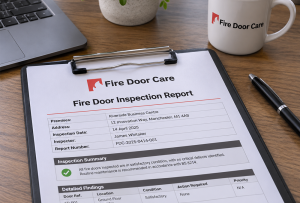
The government guidance outlines that initial checks can be carried out by a competent person without needing a certified specialist every time, provided they know what to look for.
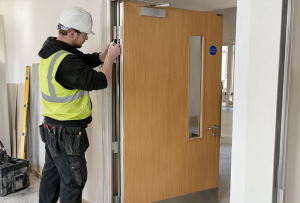
When inspecting a fire door under Regulation 10, the check must include verifying that:
- Self-Closing Devices Work: The door must close fully and reliably into its frame from any angle, overcoming any latch mechanism.
- Gaps are Correct: The gaps around the top and sides of the door should consistently be between$2mm and 4mm.
- Seals are Intact: Intumescent seals and smoke brushes must be fitted correctly around the door frame or door edge and show no signs of damage.
- Hinges are Secure: All hinges must be firmly fixed (usually three per door) with no missing screws or visible warping.
- No Material Damage: There should be no structural alterations, unapproved glazing modifications, or severe wear and tear to the door leaf or frame.
Note: If a visual inspection flags significant defects, the RP should immediately engage a certified fire door inspector or qualified joiner to undertake comprehensive repairs or replacements.
What Information Must Be Provided to High-Rise Residents?
Resident Communication Strategies and Mandatory Fire Safety Instructions
Physical checks are only half of the battle; Regulation 10 mandates that RPs proactively educate the building’s occupants. You are legally required to provide clear, accessible fire door safety information to all residents.
This information must explicitly state that:
- Fire doors must be kept shut when not in use.
- Residents and guests must not tamper with self-closing devices or make unauthorised alterations to their front doors.
- Any faults, damage, or structural issues with a door must be reported immediately to the Responsible Person.
When must this information be shared?
- To all existing residents at least once every 12 months.
- To any new resident as soon as reasonably practicable after they move in.
Digital Record Keeping and Enforcement
The Golden Thread of Building Safety and Penalties for Non-Compliance
Compliance with Regulation 10 is tightly interwoven with the principle of the “Golden Thread” of information introduced by the Building Safety Act 2022. Every inspection, communication attempt, resident information pack, and repair must be digitally logged and kept transparent.
Local Fire and Rescue Authorities are actively enforcing these regulations. Failure to comply can result in:
- Formal enforcement notices.
- Prohibition notices (closing down parts of a building if deemed unsafe).
- Unlimited fines and potential imprisonment for RPs in cases of severe, willful negligence.
You can learn more about the consequences of non-compliance in our blog post What Are The Penalties for Non-Compliant Fire Doors?
Securing Your Building’s Future
Regulation 10 has shifted the paradigm from reactive building maintenance to proactive, scheduled safety management. By embedding these quarterly and annual fire door checks into your standard operations, you don’t just ensure legal compliance – you safeguard the lives of everyone who calls your building home.
Are you prepared for your next quarterly fire door inspection? If you are an RP, what strategies have you found most effective for securing flat access from residents? Reach out to our team for compliance guidance.
Why Choose Fire Door Care?
Fire Door Care are LPCB certified meaning your can have total confidence in our work and your compliance. We specialize in the full lifecycle of fire door safety. From initial inspections and identifying hardware failures to the precision installation of fire-rated components, we ensure your property meets all current safety standards.
Our certified team delivers high-quality solutions to enhance fire resistance, prevent smoke spread, and safeguard lives. Whether you need a new fire door, routine inspections, or urgent repairs, we provide reliable and cost-effective services tailored to your needs.
- Safety First: We prioritise protecting lives and properties by ensuring every fire door meets the highest safety standards.
- Uncompromising Quality: Our expert team delivers precision craftsmanship and reliable solutions for long-lasting fire protection.
- Integrity You Can Trust: We are committed to honest, transparent, and dependable service at every step of the process.
- Customer Focused: Your safety is our mission. We tailor every inspection, repair, and installation to your unique needs.
If you would like to find out more about our fire door services, or would like help, advice or a quote please feel free to call us on 0203 488 5923 or send us a message here.