Fire safety is a critical concern in all buildings, but nowhere is it more vital than in hospitals and healthcare facilities. These environments care for some of the most vulnerable individuals in society, patients who may be immobile, under sedation, or otherwise incapable of evacuating without assistance.
In such settings, fire doors play a pivotal role in ensuring safety, containing the spread of fire and smoke, and providing critical time for evacuation and emergency response.
This in-depth guide explores the specific fire safety challenges in healthcare, the regulatory framework in the UK, and best practices for the selection, installation, and maintenance of fire doors in medical environments.
Why Fire Safety is Unique in Healthcare Settings
Hospitals and healthcare facilities face a distinct set of fire safety challenges that differ significantly from those in residential, commercial, or industrial buildings:
1. Vulnerable Occupants
Many patients are non-ambulatory, reliant on staff for movement, or connected to life-sustaining equipment. Rapid evacuation may not be feasible, necessitating robust passive fire protection to buy time.
2. Complex Building Layouts
Healthcare buildings are often large, multi-storey complexes with interconnecting corridors and departments. This complexity increases the risk of fire and smoke spreading quickly through open or poorly compartmentalised spaces.
3. 24/7 Operation
Hospitals never close. Fire safety systems must be always operational and regularly tested, and fire doors must remain effective even during periods of high traffic and usage.
4. Medical Equipment and Materials
Hospitals house oxygen tanks, chemicals, and large amounts of electrical and electronic equipment—each a potential fire hazard.
The Role of Fire Doors in Healthcare
Fire doors serve three primary purposes in healthcare environments:
- Containment: Prevent the spread of fire and smoke between compartments.
- Protection: Shield escape routes to allow for phased evacuation and protect high-risk areas such as operating theatres and intensive care units.
- Compliance: Meet stringent regulatory requirements imposed by UK law and healthcare-specific guidance.
In a fire scenario, fire doors become a frontline defence that can mean the difference between a manageable incident and a catastrophic event.
UK Regulatory Framework
Fire safety in healthcare premises in the UK is governed by a combination of general fire safety legislation, building regulations, and sector-specific guidance. Key regulations include:
1. Regulatory Reform (Fire Safety) Order 2005 (RRFSO)
This legislation places a legal duty on the “Responsible Person” (e.g. the NHS Trust or facilities manager) to ensure that fire safety measures, including fire doors, are in place and properly maintained.
2. Building Regulations 2010 – Approved Document B (Fire Safety)
Part B of the Building Regulations sets out the requirements for fire doors, including:
- Fire resistance ratings (typically FD30 or FD60).
- Self-closing mechanisms.
- Smoke control (for doors with an ‘S’ suffix, e.g., FD30S).
3. HTM 05-02 and HTM 05-03 – Firecode Guidance
Produced by the Department of Health and Social Care, the Health Technical Memoranda (HTMs) 05-02 and 05-03 provide healthcare-specific guidance. Key points include:
- Compartmentation: Hospitals must be divided into fire-resisting compartments, often based on 30 or 60 minute fire resistance.
- Progressive Horizontal Evacuation (PHE): Healthcare fire safety relies on moving patients to adjacent compartments rather than full evacuation, requiring fire doors to contain fire and smoke for sufficient time.
- Door Standards: HTM 05-03 Part K requires fire doors to be tested to BS 476-22 or BS EN 1634-1 standards, and sets out maintenance regimes and record-keeping expectations.
Fire Door Types and Requirements
The choice of fire door in a healthcare setting depends on the specific use and location. Common fire door types include:
- FD30 / FD60 Doors: Provide 30 or 60 minutes of fire resistance.
- FD30S / FD60S: Include smoke seals to prevent smoke ingress.
- Vision Panels: Required in busy corridors to reduce collision risk and improve visibility.
- Lead-Lined Fire Doors: Used in radiology departments, combining radiation and fire protection.
You can learn more about fire door ratings in our blog post The Ultimate Guide to UK Fire Door Ratings.
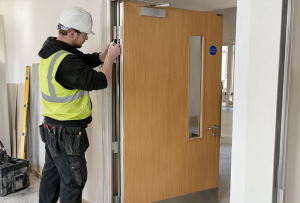
All fire doors must be third-party certified, clearly labelled, and installed by competent professionals. They should also feature:
- CE-marked or UKCA-marked ironmongery.
- Intumescent strips and cold smoke seals.
- Self-closing devices, unless exempt (e.g., in some mental health environments, risk assessments may override this)
Maintenance and Inspections
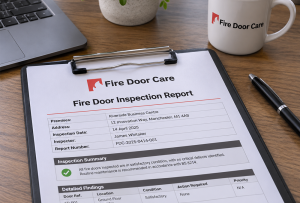
Routine fire door inspections and maintenance are vital. Fire doors in healthcare facilities should be inspected at least every six months, or more frequently in high-use areas.
Key Maintenance Checks
- Door leaves and frames are undamaged and correctly aligned.
- Intumescent seals and smoke seals are intact.
- Hinges, latches, and closers are functional.
- Doors close fully and securely.
- Clear labelling and certification marks are visible.
Under HTM 05-03, records of all inspections and maintenance activities must be kept and made available during audits.
Special Considerations
1. Mental Health Units
Here, fire door hardware must balance safety with anti-ligature design. Specialist hardware and careful risk assessment are essential to protect both patients and staff.
2. Infection Control
Fire door design must integrate with hygiene protocols—smooth surfaces, flush glazing, and minimal touch hardware may be needed.
3. Access Control
In secure units, fire doors may need to integrate with access systems. However, these systems must fail-safe to unlock in a fire situation.
Best Practices for Compliance
- Fire Risk Assessments: Conduct comprehensive fire risk assessments, with emphasis on evacuation strategies and fire door functionality.
- Staff Training: Ensure staff are trained to understand the importance of fire doors, including keeping them shut and unobstructed.
- Certification: Invest in certified doors and hardware, and use qualified certified professionals for installation and maintenance.
- Documentation: Maintain clear and up-to-date documentation for compliance inspections.
Conclusion
Fire doors are a cornerstone of fire safety in hospitals and healthcare facilities. Given the high stakes, where seconds can mean lives, compliance with UK fire door regulations and healthcare-specific standards is non-negotiable.
By understanding the unique requirements of these settings, and investing in quality fire door systems and maintenance, healthcare providers can safeguard patients, staff, and infrastructure from fire hazards.
Why Choose Fire Door Care?
Protect your property and ensure safety with our expert fire door services! We specialize in professional fire door installation, inspection, and repair, ensuring full compliance with fire safety regulations. Our certified team delivers high-quality solutions to enhance fire resistance, prevent smoke spread, and safeguard lives. Whether you need a new fire door, routine inspections, or urgent repairs, we provide reliable and cost-effective services tailored to your needs.
- Safety First: We prioritise protecting lives and properties by ensuring every fire door meets the highest safety standards.
- Uncompromising Quality: Our expert team delivers precision craftsmanship and reliable solutions for long-lasting fire protection.
- Integrity You Can Trust: We are committed to honest, transparent, and dependable service at every step of the process.
- Customer Focused: Your safety is our mission. We tailor every inspection, repair, and installation to your unique needs.
If you would like to find out more about our fire door services for healthcare establishments or any other property type, or would like help, advice or a quote please feel free to call us on 0203 488 5923 or send us a message here.