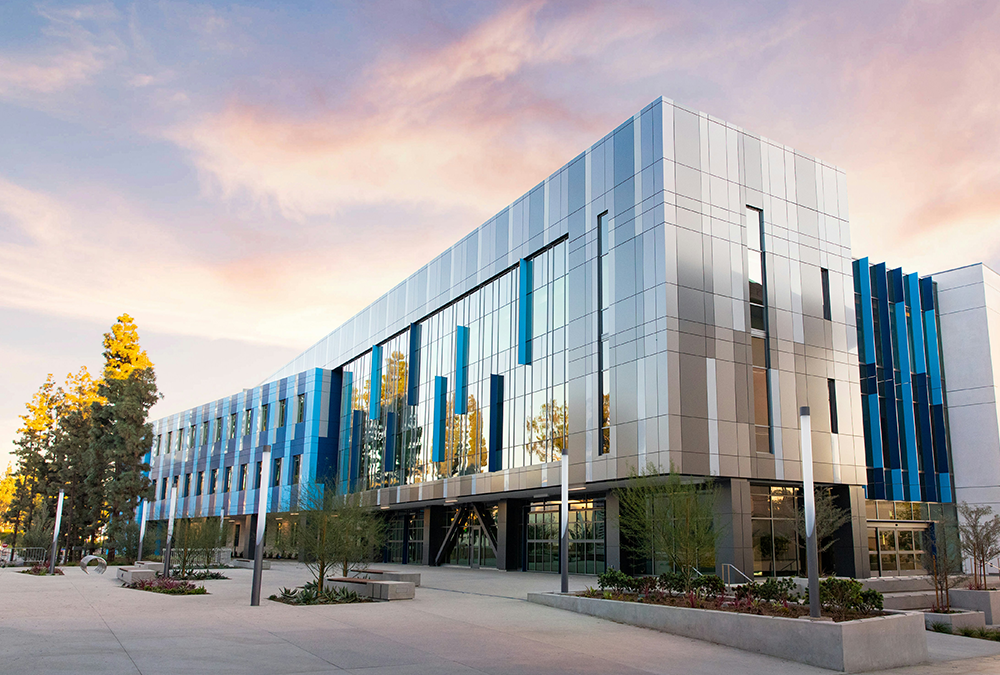
In the education sector, fire safety is not just a regulatory requirement, it’s a fundamental aspect of safeguarding students, staff, and visitors. Whether it’s a bustling primary school, a sprawling college campus, or a multi-storey university building, fire doors are a crucial part of a comprehensive fire safety strategy.
This guide provides a sector-specific overview of fire door regulations, compliance steps, and best practices tailored to the unique needs of educational institutions.
Why Fire Doors Are Critical in Educational Settings
Fire doors help delay the spread of fire and smoke, protect escape routes, and provide precious time for safe evacuation. In education environments, they’re particularly vital because:
- Children and young people may require additional support during evacuations.
- Buildings often include older structures, extensions, and mixed-use areas.
- High footfall increases the likelihood of wear, damage, and misuse.
- Boarding schools and universities may have residential zones needing enhanced protection.
Relevant UK Regulations for Educational Premises
Educational institutions must comply with several key fire safety regulations and standards:
The Regulatory Reform (Fire Safety) Order 2005
- Applies to all non-domestic premises including classrooms, lecture theatres, dormitories, and sports facilities.
- Requires a designated Responsible Person (e.g. headteacher, premises manager, or bursar) to ensure that fire safety measures are implemented and maintained (including fire doors).
Building Regulations 2010 (Approved Document B)
- Provides fire safety design guidance for both new-build schools and refurbishment projects.
- Fire doors must meet minimum fire resistance times (e.g., FD30 or FD60) and be placed in strategic locations such as stairwells, corridors, and between fire compartments.
You can learn more about fire door ratings in the blog post The Ultimate Guide to UK Fire Door Ratings.
BS 8214:2016 – Code of Practice for Fire Door Assemblies
- Advises on the correct specification, installation, and maintenance of fire doors in complex buildings, such as those commonly found on university campuses.
BS 9999:2017 – Fire Safety in the Design, Management and Use of Buildings
- Offers a performance-based approach to fire safety—relevant for larger education estates and those with multi-use spaces (e.g., libraries, lecture halls, residential blocks).
Compliance Steps for Schools, Colleges & Universities
Educational settings face a wide range of fire safety challenges. Here’s how to stay compliant:
1. Appoint a Responsible Person
- This could be the headteacher, school business manager, or facilities director.
- They must ensure compliance, schedule fire risk assessments, and coordinate remedial work.
2. Conduct a Thorough Fire Risk Assessment
- Must be specific to the type and layout of your institution (e.g., split campuses, listed buildings).
- Should identify all fire doors and assess them for location, condition, and suitability.
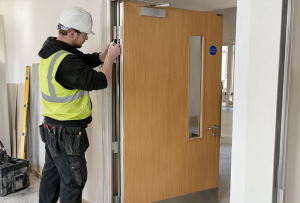
3. Install the Correct Fire Doors
- All doors separating classrooms, corridors, stairwells, kitchens, or residential areas must meet appropriate FD ratings.
- Fire doors in special educational needs (SEN) environments may require additional accessibility features (e.g. hold-open devices linked to fire alarms).
4. Inspect and Maintain Fire Doors Regularly
In high-traffic areas like canteens, corridors, and sixth form common rooms, damage is more likely. Inspect at least every 6 months or more often. Fire door inspections should check for:
- Damaged or missing intumescent seals.
- Faulty or disconnected door closers.
- Gaps exceeding 3mm around the edges.
- Fire signage and visibility panels (especially important in settings with younger pupils).
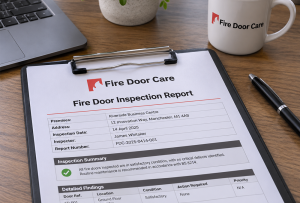
5. Create and Maintain a Fire Door Logbook
Fire door logbook should include:
- Dates of inspections.
- Identified issues and repairs carried out.
- Responsible staff names.
These logbooks are particularly useful for Ofsted inspections or fire service audits.
6. Educate Your Community
- Raise awareness with teaching staff, caretakers, and students about the importance of fire doors.
- Reinforce rules such as not propping doors open with wedges or bags, common in warm weather or during busy school transitions.
Common Fire Door Issues in the Education Sector
Even well-managed institutions can face fire door issues. Here are some education-specific examples:
- Propped open doors during class changeovers or for ventilation in hot classrooms.
- Damage from trolleys, PE equipment, or classroom furniture impacting door frames.
- Incorrect use of doorstops in SEN settings without linked automatic release systems.
- Poor maintenance due to budget constraints or lack of trained caretaking staff.
The Risks of Non-Compliance
The consequences of fire door neglect can be severe:
- Legal action under the Fire Safety Order 2005.
- Heavy fines or imprisonment for the Responsible Person.
- School closures following enforcement notices.
- Reputational damage affecting trust with parents and stakeholders.
Best Practice Tips for Fire Door Compliance in Education
To stay ahead of the regulations, schools, colleges, and universities should:
- Integrate fire door checks into daily or weekly facilities routines.
- Ensure contractors and staff working on-site are aware of fire safety protocols.
- Commission a third-party accredited fire door inspection at least annually.
- Include fire door awareness in new staff inductions and SEN risk planning.
Final Thoughts
From nursery corridors to university lecture blocks, fire doors are a critical layer of protection in educational settings. Keeping them compliant isn’t just about avoiding penalties, it’s about preserving lives and creating a safe learning environment for every student.
By understanding the regulations, appointing the right people, and embedding fire door management into everyday practice, education leaders can take confident steps toward compliance and safety.
Why Choose Fire Door Care?
Protect your property and ensure safety with our expert fire door services! We specialize in professional fire door installation, inspection, and repair, ensuring full compliance with fire safety regulations. Our certified team delivers high-quality solutions to enhance fire resistance, prevent smoke spread, and safeguard lives. Whether you need a new fire door, routine inspections, or urgent repairs, we provide reliable and cost-effective services tailored to your needs.
- Safety First: We prioritise protecting lives and properties by ensuring every fire door meets the highest safety standards.
- Uncompromising Quality: Our expert team delivers precision craftsmanship and reliable solutions for long-lasting fire protection.
- Integrity You Can Trust: We are committed to honest, transparent, and dependable service at every step of the process.
- Customer Focused: Your safety is our mission. We tailor every inspection, repair, and installation to your unique needs.
If you would like to find out more about our fire door services for educational establishments or any other property, or would like help, advice or a quote please feel free to call us on 0203 488 5923 or send us a message here.